
Mental Health Knowledge & Support Guide By Happy Minds
Mental Health Knowledge & Support Guide By Happy Minds
Mental health is as important to good health as you physical well being but tends to be misunderstood and overlooked. About At Happy Minds We are working to bring awareness, reduce stigma and provide professional mental health assistance for men, women and families living in Kathmandu, Nepal from Jhamsikhel known as the best mental health clinic in Kathmandu. This guide breaks down complex mental health concepts into easy to understand language to help you know when and how to access support.
Anxiety and Depression Explained in Nepali Context
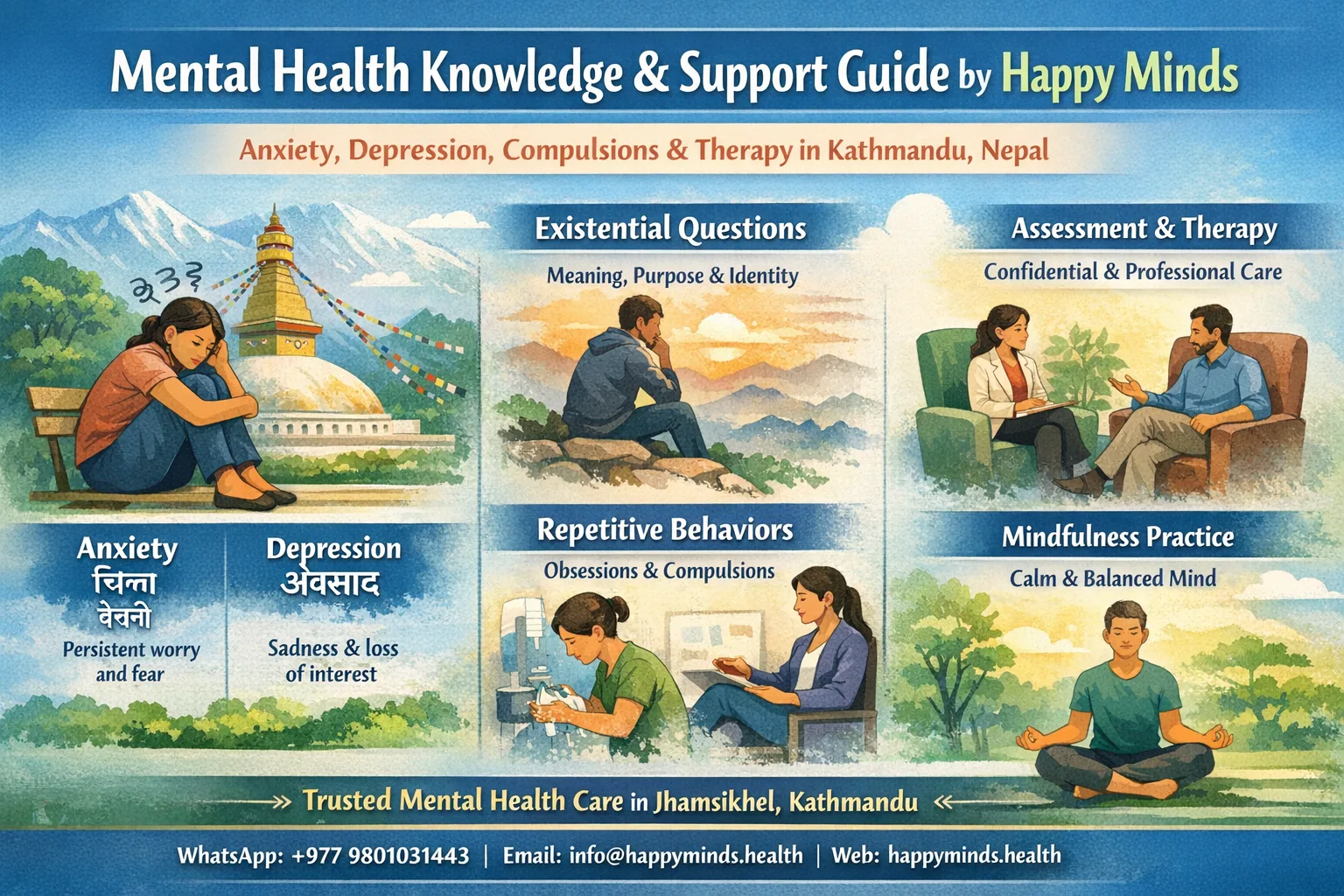
A lot of people look up online what anxiety meaning in Nepali is or what is the meaning of anxiety in Nepali as mental pain can be more effectively processed when it’s explained in one’s own language. Anxiety comes in Nepali as a feeling of चिन्ता, बेचैनी or an unhealthy amount of डर, even prolonged worry interfering with the normal life cycle.
Likewise, the depression meaning in Nepali is usually considered as अवसाद that refers to sadness along with having a sense of disinterest and heaviness. Those who search for depressed meaning in Nepali are most frequently trying to suss out feelings of hopelessness, low motivation or emotional numbness.
Knowledge about depression in Nepali culture is essential as its symptoms may occasionally be somatized more than often felt emotionally. Common symptoms of depression in Nepali includes tiredness, sleep disturbance, loss of appetite, headache, irritability and feeling worthless. Does recognizing the symptoms at an early age influence a person to seek care on time?
Psychological Experiences and Inner Struggles
-
Existential Dread and Its Emotional Impact
Existential dread is defined by profound feelings of fear or anxiety regarding the meaning and purpose of life and the unknown aspects of our existence. It surfaces when we’re in the midst of significant life changes, personal losses or reflection.
-
Existential Depression in Modern Life
Existential depression is not just sadness it's having lost faith in life as a whole and the meaning in life, identity, and existence. This is typical in highly sensitive persons, younger adults, or those who are going through an identity or career crisis.
-
Understanding the State of Being Existentially Depressed
If someone feels existentially depressed, they might feel disconnected or empty, or have overwhelming thoughts about mortality and purpose. These feelings can be examined in a safe, supportive place under the guidance of therapy like that at Happy Minds in Jhamsikhel.
Mental Health Evaluation and Self-Understanding
-
Depression Assessment for Emotional Wellbeing
Structured depression assessment gives mental health providers insight into symptoms severity, emotional dysregulation tendencies, and areas of risk. At Happy Minds, in Jhamsikhel all assessments are private and specific to the patient's need meaning that clients can receive relevant advice and treatment.
-
Am I Depressed Test and When to Use It
Looking for an am I depressed test is one of the first steps to becoming aware. While screenings online may be beneficial, they are no substitute for an assessment by a professional. A proper consultation of therapist or psychiatrist in Nepal leads to accurately diagnose and give appropriate treatments.
Personal Traits and Emotional Balance
-
Strengths and Weaknesses in Mental Health
The ability to know and understand one’s own strengths and weaknesses reinforces emotional maturity and strength. Strengths can be coping skills, emotional intelligence and support systems, while weaknesses might be in areas like stress management or regulating emotion. Therapy is directed at fostering the positive although not as invincible side and to managing the vulnerability it entails.
Repetitive Behaviors and Mental Health Patterns
-
Compulsions Definition in Psychology
The definition for compulsions refers to repetitive actions or mental acts used to relieve anxiety or distress. Such patterns of behavior are frequently related to obsessive thought, and continue until the activity becomes so routine that it can disrupt daily living.
-
Define Compulsions with Practical Examples
Common examples of compulsions include washing, checking and mental rituals. At Happy Minds Nepal, professional counseling provides an opportunity to recognize triggers and slowly decrease compulsive behavior using evidence-based therapy.
Professional Care and Support Systems
-
Components of Mental Health Services at Happy Minds
Psychological assessments, counseling, psychotherapy, medication management, crisis intervention, and wellness programs are some of the key aspects of mental health service delivery. Happy Minds Kathmandu combines these resources and provides.
Therapy Process and Client Guidance
-
How to Talk to a Therapist Effectively
Learned techniques for how to talk to a therapist can help make therapy more effective. By being able to share ideas candidly and discuss fears honestly and compare goals, therapists can tailor their unique support. At Happy Minds, the sessions are meant to be safe, respectful and non-judgmental.
-
Questions to Ask a Therapist Before Your First Session
Preparing questions to ask a counselor related to treatment approach, confidentiality and what the sessions are like can take some of the unknown and fear out of those first mental health sessions. Clarity of communication can make clients more at ease when they begin therapy in Nepal, Kathmandu.
Roles of Mental Health Professionals
-
Psychiatrist vs Therapist Comparison
Understanding psychiatrist vs therapist differences is important in selecting the appropriate care. The diagnosis and management of mental disorders and medication are the purview of psychiatrists; talk therapy (and its behavioral interventions) is for therapists.
-
Counselor vs Therapist Key Differences
The opportunity to learn the most happens when comparing counselor vs therapist; typically through training or what they are authorized to do. Counselors tend to deal with guidance, emotional issues and therapy conceptualization, while therapists typically cover deeper psychological patterns.
-
Psychiatrist vs Psychologist vs Therapist Explained
The difference between psychiatrist and psychologist and therapist is largely related to education, as well as diagnosis and treatment approach. Finding the right specialist for you comes down to your symptoms and circumstances.
Mindfulness and Therapeutic Practice
-
Mindfulness for Therapists and Clinical Use
The value of mindfulness for therapist emotion regulation, presence, and treatment. In Happy Minds, therapy for client’s well-being is offered by incorporating mindfulness practices.
Choosing the Right Mental Health Partner
-
Trusted Care and Compassionate Support at Happy Minds
The choice of the best mental health clinic in Kathmandu, Nepal makes a difference. Happy Minds offer therapeutic services driven by empathy, ethical professionalism for individuals, couples or families at our center located in Jhamsikhel.”
Final Thoughts on Emotional Health and Healing
At Happy Minds we believe that recovery is a process, not an end point. We listen, we understand and we stand for individuals at every stage of their mental wellness journey. Our services Confidential, ethical, evidence-based mental health services designed to suit the needs of people, communities and families throughout Nepal Jhamsikhel, Kathmandu. Whether you need a sense of clarity, emotional balance, an overview of your profession or long term therapeutic support - we are here.
It’s either you deserve emotional clarity, balance and peace or not, but you don’t have to arrive there alone. Contact us today:
- WhatsApp: +977 9801031443
- Email: [email protected]
- Website: happyminds.health